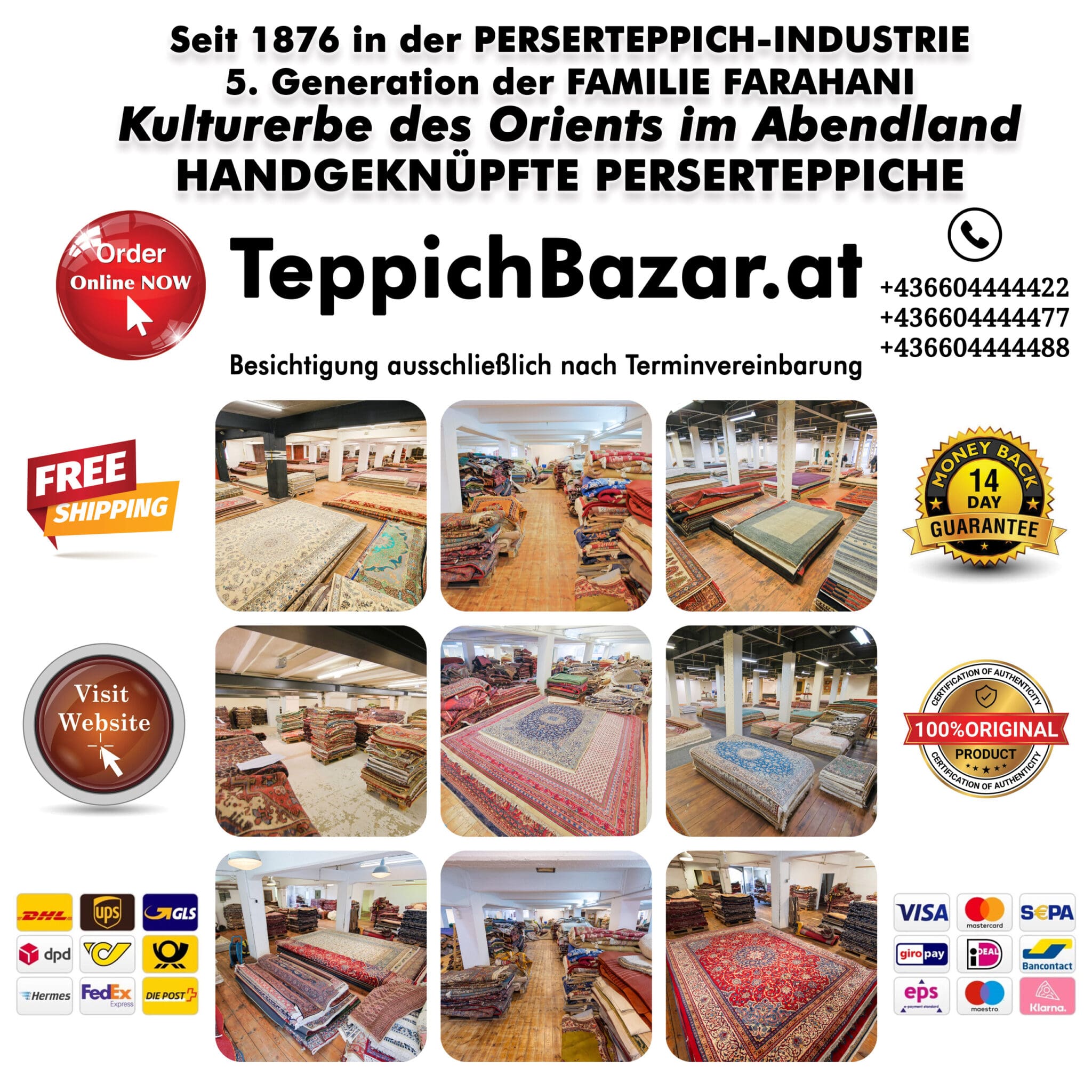
High-quality Persian carpets: origin, characteristics and care
History and origins
Persian carpets have a long and rich history dating back to antiquity. The origins of carpet weaving in Persia can be traced to the 5th century BC, when the first hand-knotted carpets were produced in the region. This art form evolved over the centuries, with different dynasties and regional styles contributing their own characteristics and techniques.
The most famous carpet centers in Persia include Isfahan, Tabriz, Kashan, and Nain. Each of these regions has its own characteristic designs and color schemes, reflecting both cultural and geographical influences. The carpets from these regions are considered not only functional objects but also works of art, often exhibited in museums and collections worldwide.
Knot density and quality
Knot density is a crucial criterion for the quality of a carpet. It is measured in knots per square meter and indicates how much handwork goes into a carpet.
- Low knot density: 40.000 to 80.000 knots per square meter, often found in cheaper carpets.
- Average knot density: 80.000 to 150.000 knots per square meter offers a good balance between price and quality.
- High knot density: Over 150.000 knots per square meter, typical for luxurious, handmade carpets.
A higher knot count generally indicates a more detailed design and a longer lifespan for the rug. When choosing a Persian rug, it is advisable to consider the knot density as one of the most important quality indicators.
materials and processing
Persian rugs are traditionally made from natural materials that ensure both aesthetics and durability. The most common materials are:
- Wool: Robust and warm, ideal for living spaces.
- Silk: Luxurious and shiny, it is often used for artistic designs.
- Cotton: Often used for carpet backing because it is durable and easy to clean.
The processing is generally done by hand, with the art of knotting being crucial to the quality of the final product. Hand-knotting requires considerable skill and experience, and the finest carpets are often produced in family workshops that pass down their knowledge through generations.
Patterns and motifs
The patterns and motifs of Persian carpets are diverse and often carry a deeper meaning. Among the most common patterns are:
- Medallion pattern: A central medallion surrounded by floral or geometric patterns.
- Allover pattern: Repeating designs across the entire carpet surface, often featuring floral or arabesque motifs.
- Animal and human depictions: These are rarer, but can occur in certain regions.
The choice of pattern can greatly influence the character of a room. Floral patterns often convey an atmosphere of elegance, while geometric designs can add a modern touch.
Colors and their meaning
Colors play a crucial role in the design of Persian rugs and are often symbolically charged. Some of the most common colors and their meanings are:
- Red: Symbolizes happiness and prosperity.
- Blue: Represents peace and tranquility.
- Green: Represents nature and fertility.
- Yellow: Often associated with joy and light.
The color combinations are often unique and reflect the cultural influences of the respective region. When choosing a rug, the color scheme should also be considered in relation to the existing furnishings and the desired style of the room.
Age and value characteristics
The value of a Persian rug is determined by several factors, including age, condition, rarity, and the quality of workmanship.
- Age: Older carpets, especially those from the 19th century or earlier, can fetch a higher price due to their rarity.
- State: Carpets in good condition, without tears or heavy wear, are more valuable.
- Rarity: Certain designs or colors may be rare, thus increasing the value.
- Documentation: Certificates and proof of origin can further increase the value.
A well-rated carpet can serve not only as a decorative element, but also be considered a valuable investment.
Authentication testing of carpets
Authenticity verification is crucial to ensure you are purchasing a genuine Persian rug. The following characteristics should be considered:
- Node structure: Genuine hand-knotted carpets have a complex knot structure that differs from machine-made carpets.
- Material: Check the materials used, as genuine Persian carpets should be made of wool or silk.
- Back: With hand-knotted carpets, the back often shows the pattern, while this is not the case with machine-made carpets.
Purchasing from a reputable retailer can also contribute to safety, as they usually pay attention to the authenticity of their products.
Tips for buying and care
Several factors should be considered when buying a Persian rug:
- Budget: Set a budget to make an informed decision.
- Room design: Consider the style and colors of your room.
- Dealer selection: Buy from trusted retailers who guarantee quality and origin.
To care for your Persian rug, it is important to:
- Regular vacuuming: Remove dirt and dust to protect the fibers.
- Treat stains immediately: Any soiling should be wiped off immediately with a damp cloth.
- Professional cleaning: Have your carpet professionally cleaned every few years to protect the colors and materials.
Proper care can significantly extend the lifespan of your carpet and preserve its beauty.
Frequently asked questions
How do I recognize a real Persian carpet?
A genuine Persian rug has a complex knot structure, is made of high-quality materials such as wool or silk, and often displays the pattern on the reverse side. Furthermore, it should be purchased from a reputable dealer.
How much does a high-quality Persian carpet cost?
Prices vary greatly depending on size, material, knot density, and design. A high-quality Persian rug can cost anywhere from a few hundred to several thousand euros.
How do I properly care for my Persian carpet?
Regular vacuuming, immediate stain treatment, and professional cleaning every few years are important to maintain the beauty and longevity of your carpet.
Where can I buy a high-quality Persian carpet?
High-quality Persian carpets can be purchased from specialized carpet dealers, antique shops, or via trusted online platforms.
In summary, purchasing a high-quality Persian rug is not only an aesthetic enhancement for your home, but also a valuable investment in art and culture. Visit reputable dealers to discover the beauty and quality of these handcrafted masterpieces.